

Table of Contents
Blog Summary:
Bio-based textiles are revolutionizing athletic apparel by proving that sustainable materials can match or exceed synthetic performance standards. The global bio-based textiles market reached $49.84 billion in 2024 and is projected to grow to $81.31 billion by 2030, with athletic wear driving much of this demand. ProECO bio-based fabrics, featuring organic cotton, bamboo, and merino wool enhanced with Ready-AbZORB and Lycra Stretch-FIT technologies, deliver superior moisture-wicking, four-way stretch, and durability for high-performance activewear.
Key Takeaways:
a. Bio-based fabrics now match synthetic performance – Advanced processing techniques like nanofiber engineering enable plant-based materials to deliver moisture-wicking, stretch, and durability comparable to traditional synthetics.
b. ProECO technologies eliminate traditional limitations – Ready-AbZORB provides instant absorbency without pre-washing, while Lycra Stretch-FIT offers four-way stretch with shape retention for athletic applications.
c. Sustainability drives competitive advantage – Bio-based textiles reduce carbon emissions by up to 85%, use 79% less water, and provide traceable supply chains that meet growing consumer demand for eco-conscious sportswear.
d. U.S.-based manufacturing ensures quality and ethics – ProECO’s domestic production provides shorter supply chains, strict environmental standards, and reliable performance that brands can trust for athletic apparel lines
The Performance Revolution: How Bio-Based Textiles Are Redefining Athletic Apparel

How do bio-based fabrics perform in athletic wear compared to synthetic materials?
This question is reshaping conversations across the fitness industry as brands rethink the materials behind their most trusted gear. Recent market research shows just how quickly this shift is unfolding: the global bio-based textiles market reached USD 49.84 billion in 2024 and is projected to climb to USD 81.31 billion by 2030, growing at a CAGR of 8.5%. Even more telling, the apparel segment alone accounted for 51.2% of revenue in 2024, clear evidence of accelerating demand for sustainable athletic fabric solutions.
This momentum reflects a deeper industry dilemma: brands have long believed they must choose between high performance and environmental responsibility. ProECO resolves this false divide.
As one customer shared, “I love that it is made in the USA… The fabric is EXACTLY what I had hoped for.” That commitment to quality, paired with U.S.-based craftsmanship, positions ProECO bio-based fabrics as a new benchmark in performance apparel manufacturing.
To explore these materials firsthand, many brands begin with our ProECO organic cotton fabrics, a foundation for building cleaner, stronger, and more future-ready activewear.
Breaking the Performance Barrier: Why Bio-Based Doesn't Mean Compromise
For many fitness brands, the biggest hesitation in shifting to eco-friendly materials is performance. Can a sustainable performance fabric truly match the rigor of training, sweating, stretching, and repeated washing? Recent data shows the industry is already moving toward a confident yes.
Plant-based fibers accounted for 25% of the global fiber marketplace in 2023, with cotton alone representing 20%. This surge signals a growing preference for bio-based performance materials that provide comfort and capability without synthetic drawbacks (Source)
What’s driving this shift is not just sustainability, but science. Advancements in material processing, including nanofiber engineering and bio-based coatings, are significantly improving moisture-wicking, stretch, and durability. These innovations place modern plant-derived fibers firmly within the realm of high-performing technical textiles.
Real-world experience echoes the data. One customer described ProECO’s four-way stretch fabric as “very flexible with 4 directions equally expandable… and so flexible with 4 directions equally expandable.” This kind of responsiveness is essential for athletes who depend on unrestricted movement from tops to leggings and compression layers.

For bio-based performance fabrics for athletic apparel brands, this means designers can now work with a plant-based activewear fabric that feels natural on the skin while meeting the performance standards of modern training gear. To explore specific options tailored for activewear, start with our curated performance activewear fabrics
The ProECO Trio: Organic Cotton, Bamboo, and Merino Wool Engineered for Athletes
What are the best sustainable performance fabrics for fitness apparel brands?
For many designers, the answer begins with understanding the three pillars of ProECO bio-based fabrics: organic cotton, bamboo, and merino wool. Each material offers a distinct performance profile, yet all share the same foundation, chemical-free purity, ethical sourcing, and engineered versatility for athletic applications.
Organic Cotton
ProECO’s organic cotton stands apart for its transparency and measurable impact. Through the U.S. Cotton Trust Protocol, every yard is traceable from farm to fabric, backed by 79% less water use, 54% lower energy consumption, and a 40% reduction in greenhouse gas emissions over 35 years. With organic cotton now the fastest-growing subsegment, fueled by demand for chemical-free textiles, it forms a reliable base for breathable tees, training layers, and green fitness apparel materials that stay gentle against skin.
Bamboo
Athletes often reach for bamboo because of its natural softness, breathability, and moisture management. One ProECO customer shared, “Just an amazing, luxurious fabric… It lets my skin breathe, keeps me comfortably warm.” These qualities make bamboo ideal for studio wear, athleisure, and organic cotton bamboo blend fabric for sustainable sportswear. To explore available options, visit our sustainable bamboo textiles
Merino Wool
Sourced through Chargeurs USA, ProECO’s merino wool is ethically produced, mulesing-free, and engineered for athletic performance. Its temperature-regulating and moisture-wicking properties excel in base layers for endurance athletes and cold-weather training.
Together, these three ProECO bio-based fabrics offer a versatile foundation for eco-conscious sportswear textiles designed to meet real athletic demands.
Ready-AbZORB and Lycra Stretch-FIT: The Technology Behind Peak Performance
How do ProECO bio-based textiles provide moisture-wicking and stretch for activewear?
The answer lies in two proprietary technologies that transform natural fibers into true performance engines: Ready-AbZORB and Lycra Stretch-FIT. Together, they give ProECO bio-based fabrics the advanced functionality required for today’s training demands.
Ready-AbZORB: Moisture Management Without Pre-Washing:
Traditional natural fabrics need extensive pre-washing to activate absorbency, a process that consumes water and energy. ProECO Ready-AbZORB fabric for high-performance athletic clothing eliminates this step.
Its engineered finish activates instant absorbency, minimizes shrinkage, and enhances fabric longevity, making it an ideal sustainable moisture-wicking fabric for fitness wear manufacturing. To explore the underlying innovation, visit our Ready-AbZORB moisture management technology.
Real-world feedback reinforces this performance boost. One customer shared, “This fabric DOES NOT retain odor or bacteria… It’s TRUE!”- a powerful indicator of how moisture and odor management translate into everyday comfort for athletes.
Lycra Stretch-FIT: Four-Way Stretch With Shape Retention
For dynamic movement and recovery, athletes depend on consistent stretching and resilience. ProECO’s Lycra-enhanced structures create an eco-friendly four-way stretch fabric with Lycra for activewear, engineered for flexibility, lift, and long-term fit stability. The Lycra helps the garment return to its original form and prevents any ‘sagging’.This makes it ideal for leggings, tops, and compression layers. Learn more through our Lycra Stretch-FIT technology.
Together, these technologies elevate ProECO’s natural fibers into sophisticated performance solutions that meet the evolving needs of modern athletes.
From Concept to Competition: Real-World Applications in Athletic Apparel
Across the fitness industry, emerging brands are discovering how bio-based textiles can elevate their apparel from early prototypes to competition-ready performance wear. ProECO’s material versatility allows designers to create targeted solutions for each product category, blending comfort, capability, and sustainability in ways that directly support modern performance apparel manufacturing.
High-Performance Leggings:
ProECO’s Lycra Stretch-FIT organic cotton delivers four-way flexibility, body retention, and durability, ideal for high-tension garments. One customer described it as “a second skin… perfect for bottoms… super nice stretch and recovery, but keeps its body too.” This makes it a reliable foundation for compression leggings, yoga pants, or strength-training apparel.
Moisture-Wicking Athletic Tops:
For sweat-intensive training, brands often turn to bamboo or Ready-AbZORB-enhanced structures. These blends create a sustainable moisture-wicking fabric for fitness wear manufacturing, allowing athletes to stay dry while enjoying the natural softness of an eco-friendly activewear fabric.
Temperature-Regulating Base Layers:
ProECO’s merino wool supports cold-weather and endurance applications, offering warmth without bulk and exceptional breathability. These qualities anchor premium outdoor and trail-running collections, aligning with industry data showing that sustainable clothing has become a premium product category.
Together, these examples reveal how a sustainable athletic fabric can transition seamlessly from prototype to production. For brands ready to begin, ProECO provides a clear, supportive path from concept to launch, empowering creators to build products that look good, feel good, and perform exceptionally.
Beyond Performance: The Sustainability Advantage That Sets Brands Apart
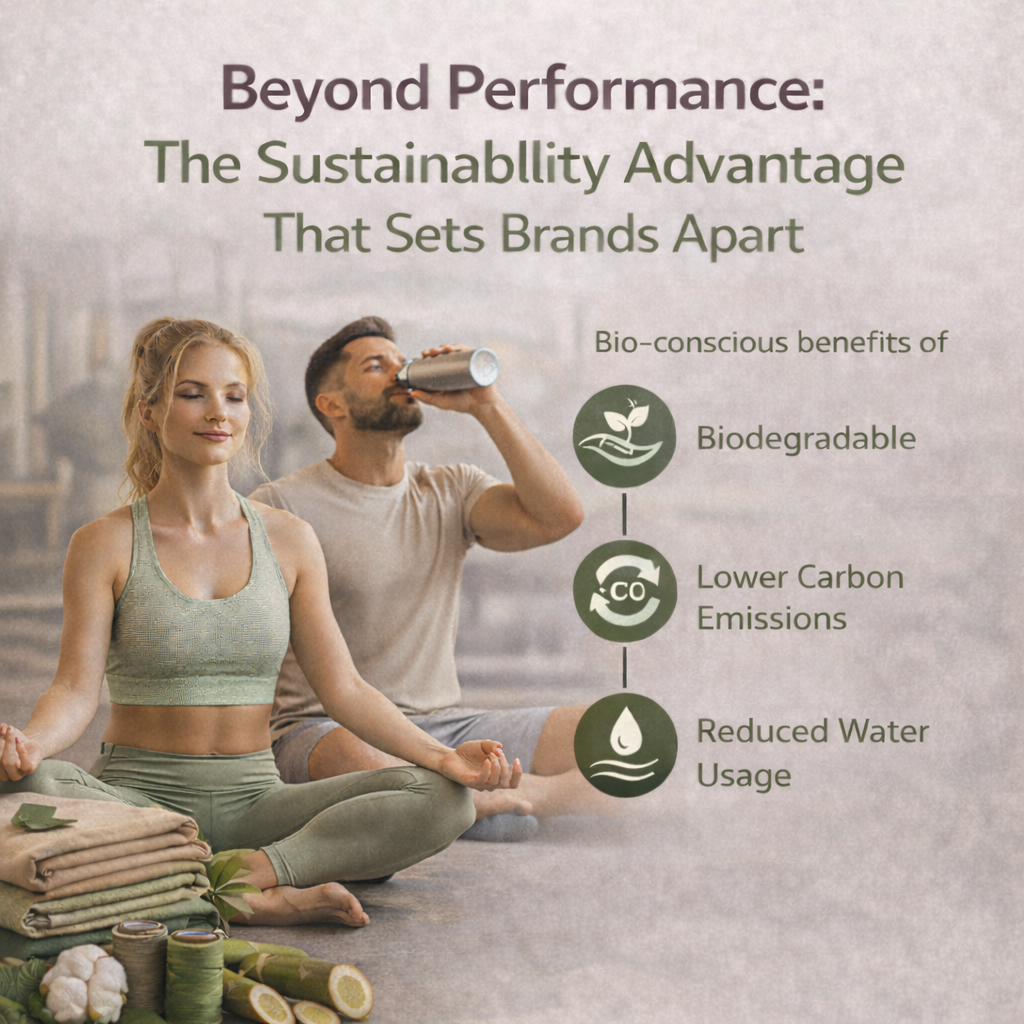
As the athleticwear industry evolves, sustainability is becoming more than a value; it’s a market differentiator. Today’s consumers expect brands to choose materials that minimize environmental impact, and a sustainable performance fabric provides a clear competitive advantage.
Research shows that bio-based textiles are biodegradable, reduce reliance on fossil fuels, and significantly lower carbon emissions and water usage compared to synthetics. In fact, recycled polyester can reduce carbon emissions by up to 85% compared to virgin fossil-based textiles.
Transparency is driving these shifts. Systems like the U.S. Cotton Trust Protocol provide article-level traceability, giving brands verifiable sustainability data to meet rising consumer expectations. ProECO strengthens this commitment through U.S.-based production, ensuring ethical labor, strict environmental standards, and shorter supply chains that align with circular economy principles. Their global credibility is further supported by achievements such as the EXIM Exporter of the Year recognition.
For athletes and sensitive-skin consumers, safety matters too. One customer shared, “I have allergies and sensitivities… and was amazed I could touch this fabric without any reactions.” This underscores why eco-conscious sportswear textiles resonate: they’re not just better for the planet, they’re better for people.
Overcoming the Bio-Based Challenge: Cost, Scale, and Performance Solutions

Bio-based innovation continues to accelerate, but the transition is not without challenges. Industry analysis confirms that production costs for bio-based materials remain higher than conventional textiles, though ongoing R&D is steadily improving scalability and affordability.
Global policy support is reinforcing this progress: initiatives like the EU Circular Economy Action Plan and U.S. investments in textile recycling are driving broader adoption of biodegradable and recycled bio-based performance materials.
ProECO meets these challenges with U.S.-based manufacturing efficiencies and continuous innovation in technical textiles, ensuring dependable quality and long-term value. As one customer shared, “Extremely durable… does not pill even after many washings and remains soft and absorbent.” This real-world performance demonstrates why bio-based textiles can withstand rigorous athletic demands.
Explore more of ProECO’s advancements through our industry recognition for innovative textile development.
The Future of Athletic Apparel Starts with Your Fabric Choice

The rapid rise of bio-based performance fabrics for athletic apparel brands shows that the future of fitness wear is shifting now. With strong market growth, verifiable sustainability data, and U.S.-based transparency, ProECO bio-based fabrics offer a path for creators who want to lead, not follow, in the move toward high-performance, planet-conscious design.
As one long-time customer shared, “This fabric is off the chain… as long as I’m in business, you will have my business.” That trust reflects why so many brands rely on ProECO as they transition to a sustainable athletic fabric platform built for durability, comfort, and elevated performance.
Choosing a sustainable performance fabric isn’t just an ethical decision; it positions your brand for the next era of circular economy innovation.
Request samples and start your sustainable athletic apparel line today.
Frequently Asked Questions
1. How do bio-based fabrics perform in athletic wear compared to synthetic materials?
Bio-based fabrics now match synthetic performance through advanced processing technologies like nanofiber engineering and bio-based coatings. ProECO’s Ready-AbZORB and Lycra Stretch-FIT technologies provide instant moisture-wicking and four-way stretch without pre-washing requirements. Plant-based fibers account for 25% of the global marketplace, with innovations delivering comparable durability, breathability, and stretch recovery for athletic applications.
2. What are the best sustainable performance fabrics for fitness apparel brands?
ProECO’s trio of bio-based materials leads sustainable athletic wear: organic cotton with U.S. Cotton Trust Protocol traceability, bamboo for natural moisture management and breathability, and ethically-sourced merino wool for temperature regulation. Each material offers chemical-free purity while meeting athletic performance demands through proprietary Ready-AbZORB and Lycra Stretch-FIT technologies.
3. How do ProECO bio-based textiles provide moisture-wicking and stretch for activewear?
ProECO combines Ready-AbZORB technology for instant absorbency without pre-washing and Lycra Stretch-FIT for four-way stretch with shape retention. Ready-AbZORB eliminates traditional pre-washing requirements while minimizing shrinkage, while Lycra enhancement creates eco-friendly stretch fabrics ideal for leggings, compression wear, and dynamic athletic apparel that maintains fit through repeated use.
4. Which eco-friendly fabrics offer the best durability for athletic apparel manufacturing?
ProECO’s organic cotton with Lycra Stretch-FIT provides exceptional durability for high-tension garments like leggings and compression wear. Customer feedback confirms fabrics remain soft and absorbent after many washings without pilling. The combination of bio-based fibers with advanced processing creates sustainable athletic fabrics that withstand rigorous training demands while maintaining performance characteristics.
5. Are bio-based performance fabrics suitable for sensitive skin athletes?
Yes, ProECO bio-based fabrics are CPSIA-certified and chemical-free, making them ideal for sensitive skin. Customer testimonials confirm no allergic reactions, even for those with chemical sensitivities. The organic cotton, bamboo, and merino wool materials undergo rigorous U.S. manufacturing standards, ensuring safe, hypoallergenic performance textiles for athletes with skin concerns.
6. How does the cost of bio-based athletic fabrics compare to synthetic alternatives?
While bio-based materials currently have higher production costs than conventional synthetics, they offer superior long-term value through durability and performance retention. Government initiatives like the EU Circular Economy Action Plan are driving adoption and cost improvements. ProECO’s U.S.-based manufacturing provides efficiency advantages while delivering premium sustainable athletic fabrics that justify investment through quality and brand differentiation.
7. What sustainability advantages do bio-based athletic fabrics provide over synthetics?
Bio-based textiles are biodegradable, reduce fossil fuel reliance, and significantly lower carbon emissions and water usage. ProECO’s U.S. Cotton Trust Protocol provides 79% less water use, 54% lower energy consumption, and 40% reduction in greenhouse gas emissions. U.S.-based production ensures shorter supply chains, ethical labor standards, and full traceability for verifiable sustainability claims.
8. Can bio-based fabrics maintain four-way stretch and recovery for athletic wear?
ProECO’s Lycra Stretch-FIT technology delivers true four-way stretch with excellent shape retention in bio-based fabrics. Customer feedback describes the material as “a second skin” with “super nice stretch and recovery” that “keeps its body too.” This makes organic cotton and bamboo blends suitable for high-performance leggings, yoga wear, and compression garments requiring consistent fit and flexibility.
Join the Sustainable Fabric Movement
💡 Want to experience ProECO for yourself?